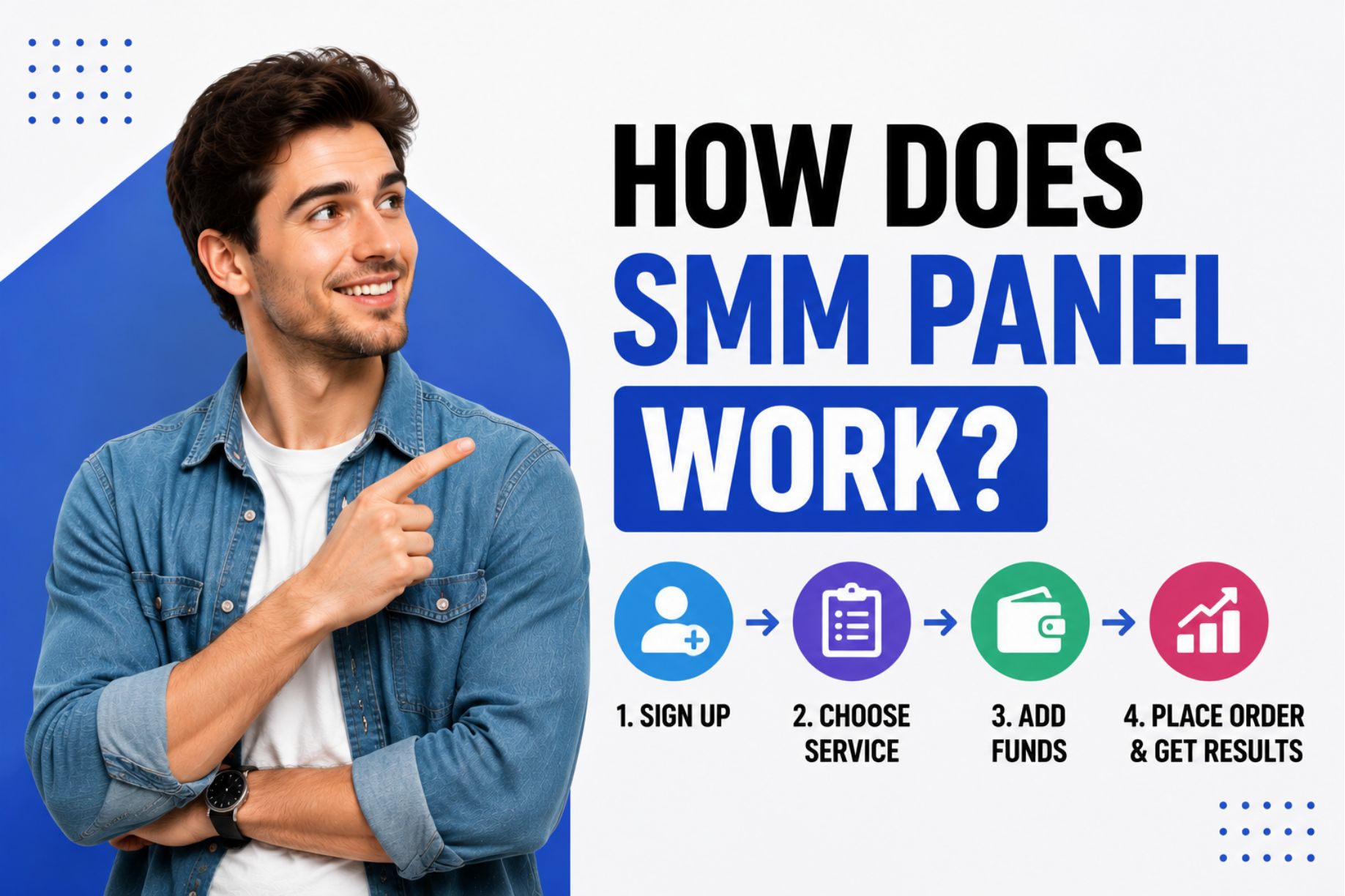

How Does SMM Panel Work? An SMM panel works as an order-management and fulfillment system. A customer selects a service, submits a target link and quantity, and pays through the panel balance. The panel then validates the request, assigns it to a fulfillment source, records updates, and displays the resulting order status.
The fulfillment source is not always the panel itself. It may be an external provider connected through an API, several providers selected by routing rules, another reseller, or a system managed directly by the panel operator.
How Does SMM Panel Work?
The complete process can be reduced to one technical sequence:
Service selection → order validation → balance deduction → provider routing → fulfillment → status synchronization.
Each stage performs a different job. The order form collects information. The panel database stores it. A routing system determines where it should go. A provider or internal source handles fulfillment. The resulting status then travels back to the user dashboard.
This is why the definition of an SMM panel should not be limited to “a website that sells followers or views.” The website is only the visible interface. The working system includes pricing data, service IDs, account balances, order records, provider connections, error handling, and support processes.
The separate guide explaining what an SMM panel is covers the general definition. This article focuses on what happens inside the system.
The Dashboard Turns a Selection Into a Structured Order
A user normally sees a category, service name, price, description, quantity field, and link field. The dashboard converts those choices into a structured order record.
That record commonly contains a Service ID, target URL, requested quantity, calculated charge, user account, creation time, and Order ID. A service with scheduling options may include additional values such as interval, run count, or delivery limits.
The Service ID is especially important. The displayed name may say “Video Views,” but the backend uses a numerical identifier to determine the exact source, price, minimum quantity, maximum quantity, refill terms, and processing method.
When the user submits the order, the system checks whether the quantity is valid, the balance is sufficient, and the required fields are present. Some panels also validate the format of the target link before accepting it.
A public-facing SMM Panel therefore operates partly like an online storefront and partly like an order-control system. The storefront displays services, while the backend translates each purchase into instructions that another system can process.
The Order Router Chooses a Fulfillment Path
After validation, the panel must determine where the order will be fulfilled.
Direct fulfillment means the panel operator controls the relevant source or delivery system. The order can remain inside the same operational environment.
Single-provider routing means the panel sends the order to one configured supplier. The panel’s Service ID is mapped to the supplier’s corresponding service.
Multi-provider routing means similar services may be distributed among different suppliers. Routing may depend on price, capacity, availability, service history, geographic requirements, or manual administrator decisions.
Reseller-chain routing occurs when one panel sends an order to another panel, which may then forward it again. The customer sees only the first dashboard, but several systems can exist between that dashboard and the final source.
API automation is common because it allows the systems to exchange orders without an administrator copying each request manually. A typical API interaction sends values such as the service identifier, target link, and quantity, then receives a provider Order ID.
The dedicated explanation of what API means in an SMM panel covers the individual requests used for creating orders, checking status, reading balance, requesting refill, or attempting cancellation.
An API does not create the service by itself. It transports instructions and responses between systems.
Statuses Travel Back, but They Need Interpretation
Once the provider accepts the request, the panel usually stores both its own Order ID and the Provider Order ID. It can then request status updates at intervals or receive them through another synchronization method.
A Pending status may mean the order exists but has not entered fulfillment. Processing or In Progress generally indicates that work has started. Completed normally means the provider has reported the order as finished.
Partial means only part of the requested quantity was completed. The unused portion may be returned to the user balance according to the panel’s billing rules. Cancelled indicates that fulfillment did not proceed or was stopped before completion.
These words are operational messages, not universal certifications. A Completed status means the order system considers its work finished. It does not guarantee permanent retention, organic audience behavior, future reach, sales, or approval from the social platform.
The article on what happens after an SMM panel order is placed follows the user-facing status process in more detail.
Users who need to check a specific request should rely on its Order ID and dashboard record rather than watching only the public number. The guide to tracking an SMM panel order explains how those records are used.
Money Flow Is Separate From Service Flow
Most panels use a prepaid balance. The user adds funds first, then the order price is deducted when a request is accepted.
The panel may charge the customer a retail rate while paying a different provider rate. The difference can cover payment fees, software, support, failed orders, refill handling, currency risk, and the operator’s margin.
This explains why two panels can display the same service label at different prices. They may use different providers, route through different numbers of resellers, include different support policies, or apply different margins.
The payment record and the provider order are related but separate. A successful balance deduction does not prove that fulfillment has started. Likewise, a provider failure does not automatically create an instant refund unless the panel receives and processes the appropriate status.
If an order becomes Partial or Cancelled, the system may return only the undelivered value. The exact calculation depends on the original quantity, delivered quantity, unit price, and panel policy.
This separation is also why support needs the Order ID. A payment transaction, panel order, and provider order may each have a different internal reference.
Different Failures Point to Different Layers
An order can fail before reaching a provider. The link may have the wrong format, the quantity may be outside the accepted range, the account balance may be insufficient, or the selected service may be temporarily disabled.
It can also fail during routing. A provider may be offline, the API credentials may be invalid, the provider balance may be empty, or the mapped Service ID may no longer exist.
Fulfillment can begin and later stop. The target may become private, the post may be deleted, the username may change, another overlapping order may interfere with measurement, or the provider may lose capacity.
Finally, the social platform can verify or adjust the resulting metrics independently. The panel can submit and monitor an order, but it does not control the platform’s counting systems or enforcement decisions.
This distinction matters because refreshing the dashboard cannot solve every failure. A validation problem, provider outage, incorrect status mapping, and platform adjustment require different responses.
A good support process first identifies which layer failed instead of treating every delayed result as the same problem.
The Panel Controls the Workflow, Not the Platform Outcome
An SMM panel can manage a catalog, accept payment, route an order, record delivery, request a status, calculate a partial refund, or submit an eligible refill request. It cannot control a social platform’s algorithm, moderation, metric verification, monetization, recommendation system, or account enforcement.
Platform rules also apply independently of the panel’s service description. YouTube’s official fake engagement policy, for example, prohibits artificially increasing views, likes, comments, and other metrics. It also warns that actions taken by a hired promoter can affect the channel.
A service marked Completed by a provider can still be reviewed, discounted, removed, or treated as invalid by the destination platform. Panel status and platform acceptance are not the same measurement.
The correct mental model is therefore not “pay and receive guaranteed growth.” It is “submit a structured order to an external fulfillment network whose result remains subject to service limitations and platform rules.”
How Does SMM Panel Work? It works by coordinating the customer dashboard, stored balance, service catalog, routing logic, provider connection, order database, and status updates. The panel automates that workflow, but the quality and durability of the outcome depend on the selected service, fulfillment source, operating conditions, and the rules of the social platform involved.